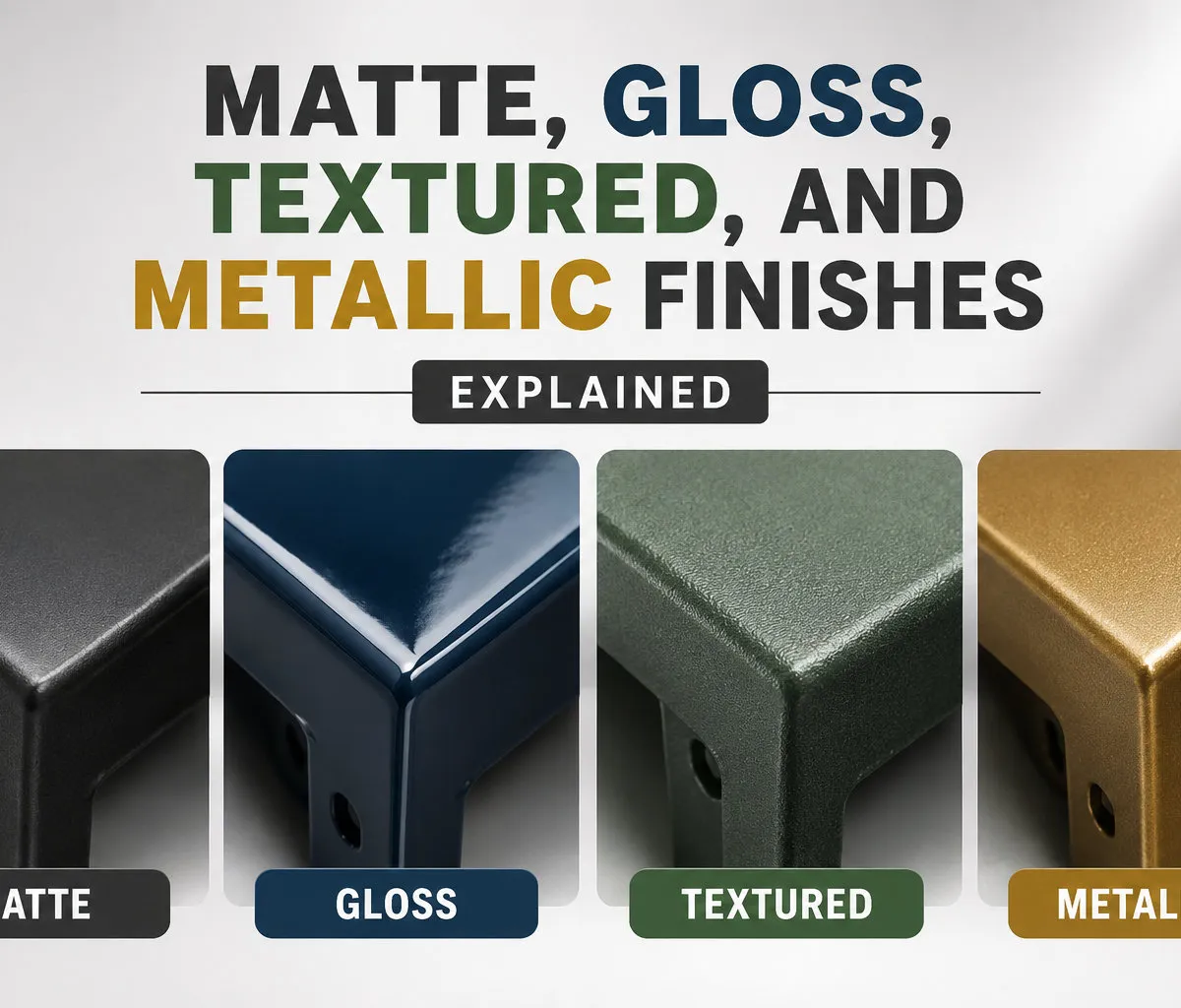
Metallic finishes explained simply: they incorporate fine metallic flakes into the powder formulation, creating a shimmering, dimensional surface that shifts subtly depending on lighting and viewing angle. But metallic is just one option in a much broader lineup of powder coating finish types, and choosing among matte, gloss, textured, and metallic can feel overwhelming once you realize how much this single decision affects both appearance and long-term durability.
This guide walks designers, architects, manufacturers, and property owners through the full range of finishes available, with metallic finishes explained in depth alongside every major alternative, so you can choose confidently based on appearance, durability, and maintenance needs rather than guessing which option fits your project.
Understanding Powder Coating Finish Types: Where to Start
Before comparing specific options, it helps to understand that powder coating finish types fall into a few broad categories: sheen level (how much light the surface reflects), texture (whether the surface is smooth or has dimensional character), and specialty effects (metallic, patterned, or unique visual finishes). Most finish decisions ultimately come down to balancing these three factors against your project's functional requirements.
Getting this decision right upfront matters, since reapplying a different finish later means stripping and recoating the entire piece, an avoidable cost when the right specification is chosen from the start.
Matte vs Gloss Powder Coating: The Fundamental Choice
The matte vs gloss powder coating decision is usually the first and most consequential choice in the process. Gloss finishes reflect light strongly, creating a polished, vibrant appearance that makes colors appear more saturated and surfaces look newer for longer, though gloss finishes also show fingerprints, scratches, and surface imperfections more readily than lower-sheen alternatives.
Matte finishes, by contrast, diffuse light rather than reflecting it, creating a soft, contemporary appearance that's become increasingly popular in architectural and automotive applications. Matte surfaces are also more forgiving when it comes to hiding minor surface imperfections or handling marks, making them a practical choice for high-touch items like railings or fixtures.
Textured Powder Coating Finish: Adding Dimension and Function
A textured powder coating finish introduces physical dimension to the surface rather than remaining perfectly smooth, achieved by adjusting the powder formulation to create a rougher, more tactile finish once cured. Beyond visual interest, texture serves genuinely practical purposes: it's more effective at hiding surface imperfections in the base metal, improves grip on handrails or equipment surfaces, and often shows fingerprints and minor scuffs far less than smooth finishes.
Textured finishes have become particularly popular for outdoor furniture and architectural railings across the Greater Toronto Area, where the added grip and imperfection-hiding qualities offer genuine functional value beyond appearance alone.
Metallic Powder Coating Finish: Depth and Dimension, Explained
With metallic finishes explained at a high level already, it's worth digging into why they behave differently from standard flat colors during application. A metallic powder coating finish's fine metallic particles create a shimmering, dimensional appearance popular for automotive parts, architectural accents, and premium furniture applications where a standard flat color doesn't deliver the desired visual impact.
One important technical consideration with metallic finishes is application consistency, since metallic particles can settle unevenly during spraying if not applied by an experienced technician, potentially resulting in visible banding or inconsistent shimmer across large surfaces. Working with an experienced powder coating provider who regularly handles metallic applications helps avoid this common pitfall.
Types of Powder Coat Finishes: A Broader Overview
Beyond the core matte, gloss, textured, and metallic categories, understanding the full types of powder coat finishes available helps you consider options you might not have initially thought of:
- Smooth finishes — Standard flat surfaces available across the full gloss-to-matte sheen range
- Textured finishes — Including fine texture, coarse texture, and specialty grip-enhancing surfaces
- Metallic and pearlescent finishes — Offering shimmer and depth through embedded metallic particles
- Specialty effect finishes — Including wrinkle, hammertone, and other distinctive surface treatments
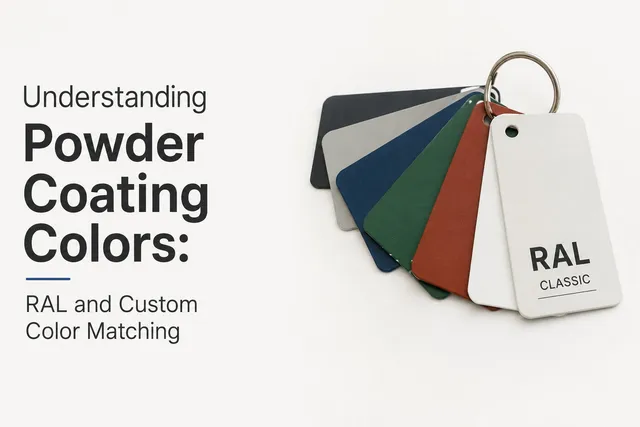
Reviewing samples in person, rather than relying solely on digital color charts, is genuinely important for finish selection, since sheen and texture can appear quite different under real-world lighting compared to a screen or printed swatch.
Satin Powder Coating Finish: The Middle Ground
For those who find gloss too reflective and matte too flat, a satin powder coating finish offers a genuine middle ground. Satin finishes provide a subtle sheen, more reflective than matte but noticeably softer than full gloss, striking a balance that's become popular for both residential and commercial applications wanting a refined but not overly shiny appearance.
This middle-sheen option also tends to hide minor surface imperfections better than high gloss while still offering more visual depth and richness than a completely flat matte finish.
Powder Coating Finish Options: Matching Choice to Application
When narrowing down powder coating finish options, consider how the piece will actually be used day to day. High-touch items like door handles, railings, and furniture benefit from matte or textured finishes that hide fingerprints and wear. Decorative or showcase pieces, including architectural accents or automotive components, often benefit from gloss or metallic finishes that maximize visual impact.
Outdoor applications add another consideration layer entirely, since UV exposure, temperature swings, and moisture all interact differently with different finish types over time.
Best Powder Coat Finish for Outdoor: Durability Considerations
Determining the best powder coat finish for outdoor applications in Ontario's climate requires balancing aesthetics against genuine environmental durability. Matte and satin finishes generally show less visible UV fading over time compared to high-gloss finishes, since gloss surfaces tend to reveal subtle sheen loss more noticeably as the coating weathers. Metallic finishes hold up reasonably well outdoors too, though the shimmer effect can soften slightly with prolonged UV exposure.
Textured finishes also perform well outdoors, since their surface characteristics help mask the gradual wear that Ontario's harsh winters, road salt exposure, and freeze-thaw cycles inevitably cause over a coating's service life.
Wrinkle Finish Powder Coating: A Distinctive Specialty Option
Wrinkle finish powder coating creates a distinctive crinkled, textured surface achieved through a specific curing process that causes the powder to form natural wrinkle patterns as it cures. This finish offers exceptional imperfection-hiding capability, making it a popular choice for industrial equipment, tool boxes, and functional items where a rugged, no-nonsense appearance is desired over a polished look.
Beyond aesthetics, the wrinkle texture also provides genuinely useful grip and scratch-hiding properties, making it a practical choice for equipment that sees frequent handling or rough use.
Hammertone Powder Coating Finish: Industrial Character
A hammertone powder coating finish replicates the appearance of hand-hammered metal, creating a distinctive dimpled, textured surface that's become a popular choice for railings, gates, and decorative metalwork wanting an artisanal, industrial character. Like textured and wrinkle finishes, hammertone offers excellent imperfection-hiding qualities alongside its distinctive visual character.
This finish type works particularly well for projects aiming for a traditional or rustic aesthetic, since the dimensional pattern catches light in a way that mimics genuine hand-forged metalwork, without the cost or maintenance demands of actual hammered iron.
Powder Coating Sheen Levels: Understanding the Full Range
Powder coating sheen levels are typically measured on a gloss meter scale, ranging from flat matte (very low reflectivity) through satin and semi-gloss to full high gloss (maximum reflectivity). Understanding where your desired finish, including metallic, falls on this scale helps ensure clear communication with your coating provider and consistent results across an entire project, particularly important for larger installations where visual uniformity matters.
Requesting a physical sample panel in your chosen sheen level before committing to a full production run remains the most reliable way to confirm the finish will look exactly as expected once applied to your actual project. Learning more about Koojo's finish capabilities and quality process can help you understand what's genuinely achievable for your specific project before you request a quote.
Frequently Asked Questions
1. What makes metallic powder coating different from standard colors?Metallic finishes incorporate fine metallic particles into the powder formulation, creating a shimmering, dimensional appearance that shifts with lighting and viewing angle, unlike the flat, uniform look of standard colors.
2. Is matte or gloss powder coating more durable?Both offer similar underlying protection, but matte and satin finishes tend to show less visible wear and UV fading over time, making them a practical choice for outdoor applications facing significant sun exposure.
3. Can I mix different finish types on the same project?Yes, combining finishes, such as a metallic accent with a matte primary surface, is achievable, though it typically requires separate coating runs and should be planned carefully with your provider.
4. Why does metallic powder coating sometimes look inconsistent?Inconsistent application technique can cause metallic particles to settle unevenly during spraying, resulting in visible banding, which is why working with an experienced applicator matters significantly for metallic finishes.
5. How can I be sure a finish will look right before committing to a full project?Requesting a physical sample panel in your exact chosen finish and sheen level is the most reliable way to confirm appearance before committing to full production, since screens and printed swatches often don't accurately represent real-world results.
Final Thoughts: Metallic Finishes Explained and Your Other Options
With metallic finishes explained alongside matte, gloss, textured, and specialty options like wrinkle and hammertone, choosing the right powder coating finish comes down to genuinely understanding how sheen, texture, and shimmer will perform for your specific application, not just how they look in a sample chart. Whether you're prioritizing a polished architectural statement or rugged industrial durability, matching the right finish to your project's real-world demands ensures a result that looks great and holds up over years of actual use.
Koojo Custom Powder Coating10874 Steeles Ave E, Milton, ON L9T 2X8, CanadaPhone: (905) 876-7060