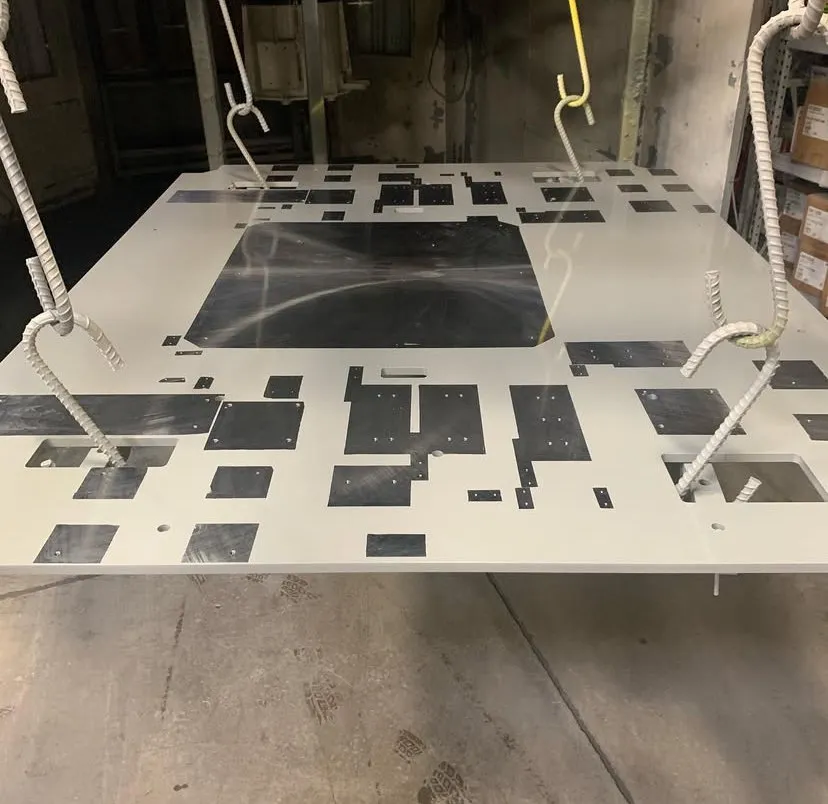
Powder coating surface preparation is the cleaning, pretreatment and masking work that decides whether a powder finish bonds for years or fails within months. At Koojo Custom Powder Coating, every part is degreased, chemically treated, rinsed and dried before any powder goes on. Since 2012, our Milton team has prepared more than 10,000 items for fabricators, manufacturers and contractors across the GTA, with a 48-hour turnaround. Whether you send raw steel weldments, machined components or aluminum brackets, our surface preparation for powder coating removes oil, residue and contamination so the coating can grip the metal. Request a quote below, or call (905) 876-7060, Monday to Friday, 7 AM to 5 PM, and our team will advise on the right pretreatment for your parts.
Since 2012 | 10,000+ Items | 48 Hr Turnaround | 5.0 ★ Google Rating
What Is Powder Coating Surface Preparation?
Powder coating surface preparation is the sequence of cleaning, chemical treatment, masking and drying steps that readies bare metal for powder. It removes oils, oxides and soils, then leaves a clean, slightly reactive surface so the powder bonds firmly while it cures.
Powder cannot hide a dirty surface. Thermoset powder melts and flows in the oven at a cure temperature of 180–200 °C, so any film of cutting oil, forming lubricant or fingerprint residue trapped underneath causes craters, fisheyes and weak powder coating adhesion. Proper powder coating pretreatment solves two problems at once: it cleans the part, and it adds a thin conversion coating that improves grip and slows rust under the finish.
Without it, even premium powder can lift at edges and welds. That is why we treat surface preparation for powder coating as a core production step, never a cosmetic extra, and why every job at our shop begins here rather than in the spray booth. The powder is the visible finish, but the bond underneath decides how long it stays attached.
How Does Our Powder Coating Pretreatment Process Work?
Our powder coating surface preparation has five stages: inspection and masking, alkaline cleaning, rinse, phosphate conversion treatment, and a final rinse and dry-off. Each stage removes one specific barrier to adhesion, and parts move to coating only when they are clean, dry and free of flash rust.
1. Inspection and masking (on arrival). We check each part for heavy rust, old coatings, weld spatter and trapped oil. We then mask threads, bores and contact faces with high-temperature plugs and tape. Masking for powder coating protects precision features, so bolts still thread in after curing.
2. Alkaline cleaning. A cleaning bath performs oil and grease removal from cutting fluid, shop dirt and handling marks. Degreasing before powder coating is the strongest defence against craters, so we never skip it, even on parts that look clean.
3. Rinse. Clean water flushes cleaner residue, which would otherwise interfere with the chemical treatment that follows.
4. Phosphate pretreatment. This step forms a thin crystalline layer on the metal. The layer improves grip and gives the finish a protected base. Metal pretreatment for powder coating always depends on the substrate and on where the finished part will live.
5. Final rinse and dry-off. A last rinse removes chemical salts. The rinse and dry-off step then drives off moisture, which is the key to flash rust prevention. Parts go straight to coating once dry.
Timing matters as much as chemistry. Every stage sits inside our standard 48-hour turnaround, and we receive parts Monday to Friday, 7 AM to 5 PM. Because multi-stage pretreatment happens first, coating and curing always start from a controlled surface. Our powder coating pretreatment is built into the schedule, not added afterwards, so a well-prepared part never waits on a separate booking. If your project has a deadline, tell us when you request a quote and we will plan around it. Clear communication at the start keeps powder coating surface preparation on schedule and avoids surprises at pickup.
Which Metals and Parts Need Surface Preparation for Powder Coating?
Every metal needs preparation, but the method changes with the substrate. Steel needs oil and residue removed, aluminum needs its oxide layer controlled, and galvanized steel needs careful treatment and outgassing management. Fabricated and machined parts also need masking before coating.
- Steel. Steel pretreatment targets mill oil, weld residue removal and early rust. It is the most common job we handle, and the metal pretreatment for powder coating we apply is matched to the part.
- Aluminum. Aluminum pretreatment uses a chemical treatment that cleans the surface and builds a bonding layer, because raw aluminum oxidizes quickly. Here, the chemical treatment protects adhesion more than any other step.
- Galvanized steel. Zinc surfaces respond differently from bare steel and can release trapped gases while curing, so galvanized parts get their own preparation plan.
Typical parts include welded frames, brackets, guards, railings, bollards, machine components and equipment housings. Each one needs powder coating surface preparation sized to its shape, because deep corners and enclosed sections trap oil and moisture more easily than flat plate. Our fabricated parts pretreatment and custom part preparation cover one-off pieces and repeat production runs, with the same standard applied to both. Good preparation means each load leaves with a production-ready surface, whatever the shape or size.
What Pretreatment Options Does Koojo Offer?
Koojo matches the pretreatment to the part. Most steel receives a standard wash and phosphate sequence, aluminum and galvanized metal get a suitable chemical pretreatment, and parts with threads or sealing faces receive detailed masking. Heavy rust or old coatings are handled before pretreatment.
- Standard pretreatment wash stages. Cleaning, rinsing, conversion treatment and drying for everyday steel parts, delivered as consistent powder coating pretreatment.
- Iron or zinc phosphate. Iron phosphate pretreatment suits many indoor and general-duty parts. Zinc phosphate pretreatment is considered when a part needs extra rust prevention before coating, such as outdoor equipment.
- Plugging and masking. Threaded hole masking, bore plugs and tape protect dimensions. Tell us about special requirements when you quote.
- Heavy cleaning first. Thick rust, scale or an old finish needs more than a wash. Our sandblasting service removes it mechanically, and our restoration and recoating service handles aged coatings, before pretreatment begins.
Not sure which option fits? Send photos and the part material. We will recommend an approach, and our surface preparation for powder coating advice comes with your quote. Choosing the right powder coating surface preparation up front is far cheaper than fixing a failed finish later, and for aluminum and galvanized work we select the metal pretreatment for powder coating that suits that substrate.
How Do We Check Pretreatment Quality?
We verify preparation through visual inspection, surface checks and adhesion testing on the finished coating. Koojo is certified through the Absolute Bureau of Certification, our inspection steps are documented, and test reports are available on request, so you can trust the work behind every finish.
Pretreatment quality control starts before the bath: we look for oil, rust and weld residue on arrival. After rinsing, a clean surface should hold a continuous film of water, which is the idea behind the water break test. On the finished part, a cross-hatch adhesion test to ASTM D3359 shows whether the powder is gripping the metal.
Surface contamination is the most common cause of coating adhesion failure, and it shows up later as peeling and blistering. Catching it early costs far less than recoating. Strong powder coating pretreatment also keeps results consistent from batch to batch, and the same surface preparation for powder coating standard applies to every load. We hold our metal pretreatment for powder coating to the same documented checks, and powder coating surface preparation is never signed off until the part passes them. For the blasting cleanliness grades behind these checks, read our guide to surface preparation standards, and see our certification page for details on how we work. Our metal cleaning before powder coating is part of that documented process.
See Surface Preparation in a Real Project
Welded frames arrive with weld residue, forming oil and tight tolerances, which makes powder coating surface preparation critical. Our conveyor frame case study shows what a documented job looks like for a real production customer, from the incoming part to the finished coating.
Read the conveyor frame for an automotive plant project to see the part, metal, size, powder, colour code and turnaround recorded for a real production job. Before and after photos show the standard we hold ourselves to, and the same documented approach applies to your parts.
Which Industries Rely on Our Surface Preparation?
Fabricators, machine shops, manufacturers and contractors rely on us most. These customers need dependable industrial metal cleaning, tight masking and repeatable results that match the next batch. Our approach scales from single parts to production runs, and every customer receives the same careful treatment.
See how we support metal fabricators and welding shops, where weld residue is the main concern, and machine shops, where masking protects precision features. Our powder coating surface preparation also supports our wider industrial powder coating work, our metal pretreatment for powder coating on large fabrications, and the full range of powder coating services at our Milton shop.
Get Your Parts Prepared Right
Ready for a stronger finish? Send part photos and details through our quote form for powder coating surface preparation advice, or visit 10874 Steeles Ave E, Milton, Monday to Friday, 7 AM to 5 PM. Call (905) 876-7060 or email sales@koojopowdercoating.com.
Frequently asked questions
question
answer
question
answer
question
answer
question
answer