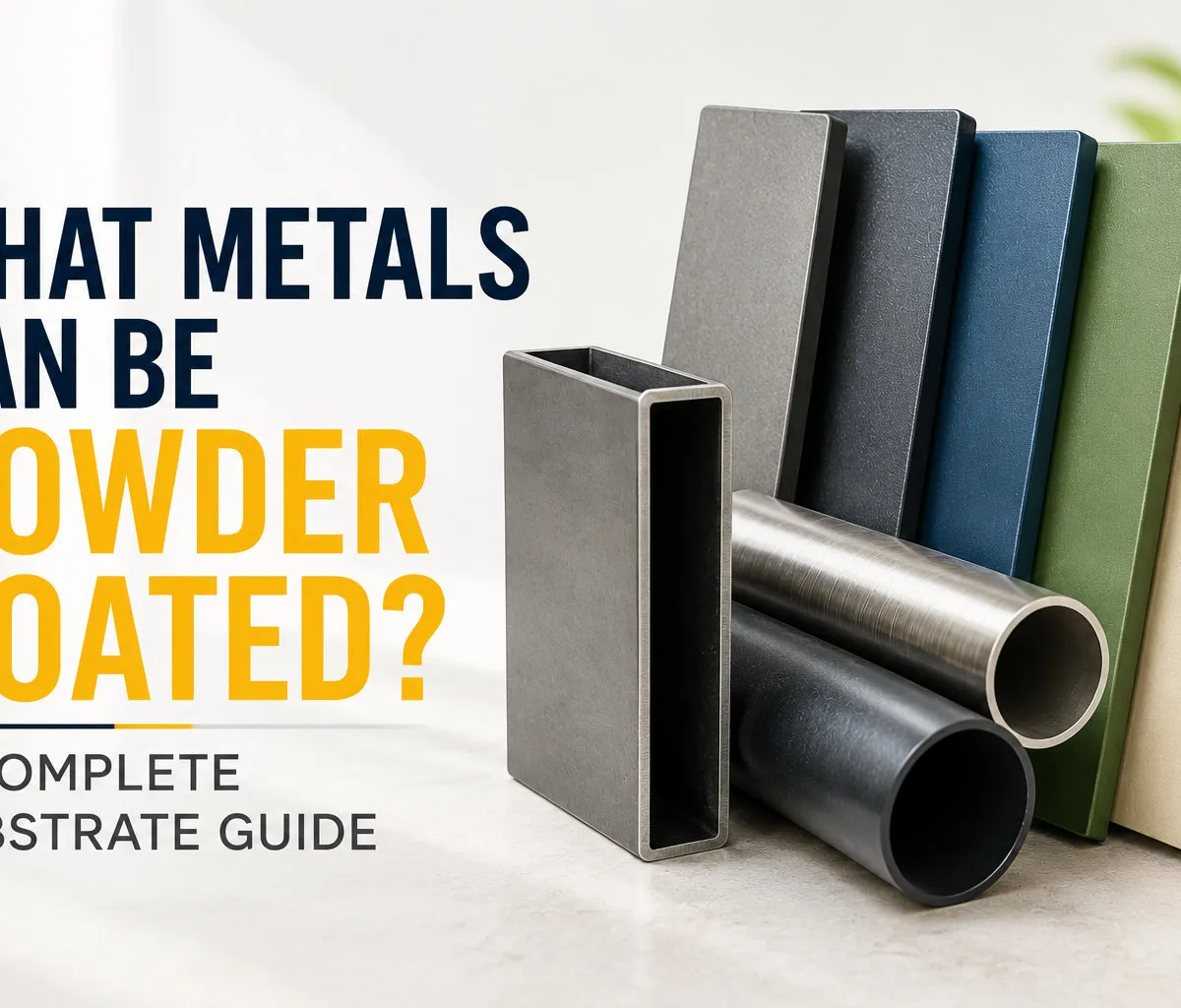
Before requesting a quote, most people ask the same fundamental question: what metals can be powder coated? The good news is that powder coating works with a wider range of metal substrates than many people realize, though not every metal responds equally well, and a few require special preparation or specific process considerations to achieve a durable, lasting finish.
This guide walks through exactly which metals are suitable for powder coating, what makes certain substrates more challenging than others, and what fabricators, contractors, and DIY metalworkers in the Greater Toronto Area should know before bringing a project in for coating.
Metals Suitable for Powder Coating: The Short Answer
At a high level, metals suitable for powder coating include steel, aluminum, stainless steel, galvanized steel, and cast iron, covering the vast majority of metal fabrication and manufacturing projects. What determines suitability isn't simply whether a metal is conductive, since the electrostatic application process requires a grounded, conductive surface, but also how the metal responds to the curing oven's heat and how well it accepts proper surface preparation.
Understanding this distinction matters because a metal being technically conductive doesn't automatically mean it's a practical or cost-effective candidate for powder coating in every situation.
Can Steel Be Powder Coated: The Industry Standard
Steel is, by a wide margin, the most common substrate in the powder coating industry, and the answer to can steel be powder coated is an unambiguous yes. Steel's conductivity, heat tolerance, and widespread use in fabrication make it exceptionally well suited to the electrostatic application and oven-curing process.
Mild steel, in particular, is the baseline material most powder coating specifications and equipment are optimized around. Proper surface preparation, typically sandblasting or chemical pretreatment to remove rust, mill scale, and contaminants, is essential regardless of steel type, since powder coating's durability depends heavily on strong adhesion to a clean, properly prepared surface.
Can Aluminum Be Powder Coated: A Popular but Nuanced Choice
Can aluminum be powder coated is one of the most frequently asked questions, particularly given aluminum's popularity in architectural, automotive, and outdoor furniture applications. The answer is yes, and aluminum is actually one of the best-performing substrates for powder coating, offering excellent adhesion and a long-lasting finish when properly prepared.
The key consideration with aluminum is surface preparation, since aluminum naturally develops an oxide layer that must be removed or properly treated before coating to ensure strong adhesion. Many fabricators specifically choose powder coating over wet paint for aluminum components precisely because of this superior bond and finish consistency.
Powder Coating Stainless Steel: Why Bother?
Powder coating stainless steel might seem counterintuitive at first, since stainless steel already offers natural corrosion resistance. However, many clients choose to powder coat stainless steel purely for aesthetic reasons, achieving specific colors, textures, or finishes that raw stainless steel simply can't provide on its own.
Because stainless steel already resists corrosion effectively, the coating process here is less about protection and more about achieving a specific visual outcome, whether that's a matte architectural finish, a bold custom color, or brand-consistent equipment coating for commercial applications.
Can Galvanized Metal Be Powder Coated: Special Considerations
Can galvanized metal be powder coated is a question with an important nuance attached: yes, but it requires careful handling. Galvanized steel's zinc coating can trap gases that release during the curing oven's heat cycle, potentially causing small bubbles or "outgassing" defects in the finished powder coat if not properly managed.
Experienced coaters address this through specific pretreatment processes and sometimes extended curing schedules designed to allow trapped gases to escape before or during the coating process, rather than after the finish has already cured. Working with an experienced powder coating provider who understands this specific challenge helps avoid costly rework on galvanized projects.
Can Cast Iron Be Powder Coated: Handling a Porous Material
Can cast iron be powder coated is a common question given cast iron's widespread use in outdoor furniture, cookware, and structural components. The answer is yes, though cast iron's naturally porous surface requires thorough cleaning and preparation to remove embedded contaminants and ensure the coating adheres properly across the entire surface.
Cast iron's excellent heat retention actually works in its favor during the curing process, often allowing for efficient, even curing once properly prepped, making it a genuinely solid candidate for powder coating despite the additional prep work involved.
Powder Coating Substrate Compatibility: What Determines Success
Understanding powder coating substrate compatibility more broadly comes down to three core factors: electrical conductivity (required for the electrostatic application process), heat tolerance (the substrate must withstand curing oven temperatures, typically 350 to 400°F, without warping or degrading), and surface preparation feasibility (the ability to properly clean and prep the surface for adhesion).
Metals that satisfy all three factors, which includes most common structural and fabrication metals, are generally excellent powder coating candidates, while materials that fail even one of these criteria typically require alternative finishing methods instead.
Can Copper Be Powder Coated: A Less Common but Valid Option
Can copper be powder coated is a less frequently asked question, but the answer is yes, with some practical considerations. Copper is highly conductive, making it well suited to the electrostatic application process, and it tolerates curing oven temperatures reasonably well, though its higher cost compared to steel or aluminum means copper components are less commonly brought in for standard powder coating work.
When copper pieces are coated, whether for decorative architectural elements or specialty components, proper surface cleaning remains essential, since copper's natural patina and any surface oxidation must be addressed before coating for reliable adhesion.
Powder Coating on Wrought Iron: A Classic Combination
Powder coating on wrought iron has become an increasingly popular alternative to traditional wet paint, particularly for railings, gates, and outdoor furniture. Wrought iron's durability pairs exceptionally well with powder coating's superior chip and fade resistance, creating a finish combination well suited to withstand Ontario's harsh winters, road salt exposure, and repeated freeze-thaw cycles.
This combination is especially popular across the Greater Toronto Area for outdoor railings and fencing, where the added protection against corrosion and UV fading delivers genuinely better long-term value than repainting wrought iron every few years with conventional wet paint.
Best Metals for Powder Coating Durability: Ranking the Options
When durability is the top priority, the best metals for powder coating durability generally rank as follows: steel and aluminum lead the pack, offering the most consistent, long-lasting results across the widest range of applications. Stainless steel follows closely, though its coating is often more about aesthetics than added protection. Cast iron and galvanized steel round out strong performers, provided proper preparation addresses their specific handling requirements.
Ultimately, "best" depends heavily on your specific application, environmental exposure, and budget, which is why discussing your particular project with an experienced coating provider often yields better results than defaulting to a generic ranking alone. You can learn more about the expertise behind proper substrate handling and how it affects finish quality across different metal types.
Frequently Asked Questions
1. Is there any metal that cannot be powder coated? Metals with very low melting points or those that can't withstand curing oven temperatures (typically 350-400°F) generally aren't suitable, though most common structural and fabrication metals handle the process well.
2. Does galvanized metal require special treatment before powder coating? Yes, galvanized steel requires specific pretreatment and sometimes adjusted curing schedules to prevent outgassing defects caused by trapped gases releasing during the heat curing process.
3. Why would someone powder coat stainless steel if it already resists corrosion? Powder coating stainless steel is typically done for aesthetic reasons, achieving specific colors or finishes, rather than for additional corrosion protection, since stainless steel already performs well on its own.
4. Is aluminum a good candidate for powder coating outdoor furniture? Yes, aluminum is one of the best-performing substrates for powder coating, offering excellent adhesion and long-lasting durability when properly prepared, making it a popular choice for outdoor furniture.
5. Does cast iron need different preparation than steel before powder coating? Yes, cast iron's naturally porous surface requires more thorough cleaning to remove embedded contaminants, compared to the more straightforward preparation typically needed for standard steel surfaces.
Final Thoughts on What Metals Can Be Powder Coated
Understanding what metals can be powder coated comes down to recognizing that most common fabrication metals, steel, aluminum, stainless steel, galvanized steel, and cast iron, are genuinely excellent candidates, provided each substrate's specific preparation and handling requirements are respected. Working with an experienced provider who understands these substrate-specific nuances ensures your project gets a durable, properly adhered finish regardless of which metal you're starting with.
Koojo Custom Powder Coating 10874 Steeles Ave E, Milton, ON L9T 2X8, Canada Phone: (905) 876-7060