Choosing between powder coating vs anodizing comes down to understanding two fundamentally different processes, one applies a coating to the metal's surface, the other transforms the surface itself through an electrochemical reaction. Both deliver excellent durability and finish quality, but they perform differently depending on your metal type, budget, and specific application.
This guide breaks down exactly how these two finishing methods compare, so manufacturers, fabricators, and product designers across the Greater Toronto Area can choose the right process for their specific metal project rather than defaulting to whichever option sounds more familiar.
Difference Between Powder Coating and Anodizing: The Core Distinction
Understanding the difference between powder coating and anodizing starts with recognizing they're not actually the same category of process. Powder coating applies a dry powder electrostatically to a metal surface, then cures it under heat to form a hard, continuous protective layer sitting on top of the base metal. Anodizing, by contrast, is an electrochemical process that thickens and hardens the natural oxide layer already present on certain metals, transforming part of the metal's own surface rather than adding a separate coating on top of it.
This fundamental difference explains nearly every other distinction between the two processes, from which metals they work with to how they perform under different conditions.
Anodizing vs Powder Coating Aluminum: Why This Metal Gets Special Attention
The anodizing vs powder coating aluminum comparison comes up constantly because aluminum is uniquely well suited to anodizing. Aluminum naturally forms an oxide layer, and the anodizing process amplifies this natural characteristic, creating an exceptionally hard, integrated finish that becomes part of the metal itself rather than sitting on its surface.
Powder coating also works excellently on aluminum, offering a wider range of color and finish options than anodizing typically provides, since anodizing is generally limited to more subdued, translucent color tones achieved through dye absorption into the porous anodized layer. For aluminum specifically, the choice often comes down to whether you prioritize anodizing's integrated hardness or powder coating's broader aesthetic flexibility.
Powder Coat or Anodize Which Is Better: It Depends on Your Priorities
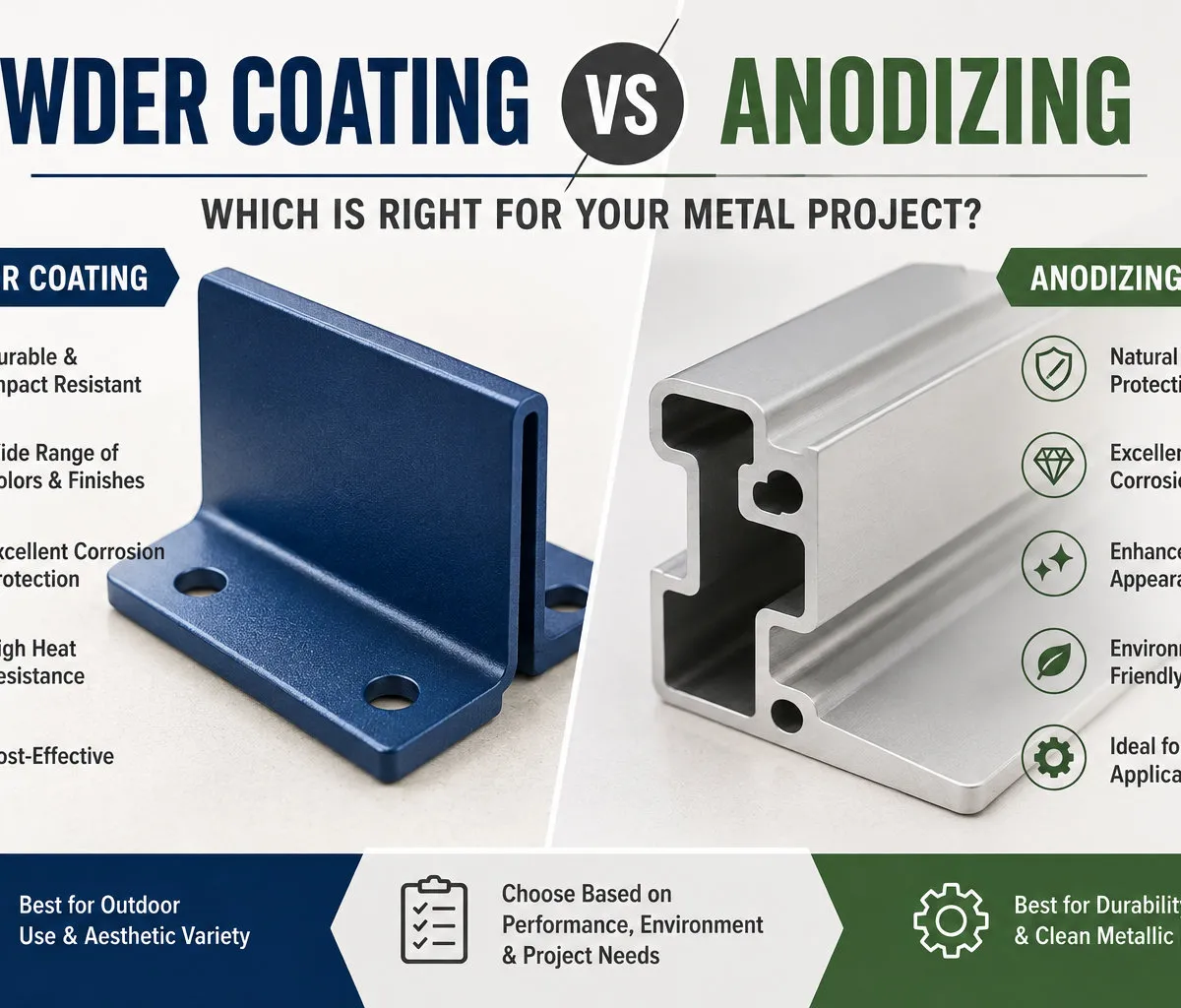
There's no universal answer to powder coat or anodize which is better, since each process has genuine strengths suited to different priorities. Anodizing offers superior resistance to abrasion and generally won't chip or peel, since it's integrated into the metal itself rather than applied as a separate layer. Powder coating offers dramatically more color and finish options, including textures, metallics, and specialty effects that anodizing simply can't replicate.
For projects where color variety, custom branding, or a specific decorative finish matters most, powder coating typically wins. For projects prioritizing maximum surface hardness and a natural metallic appearance, anodizing often has the edge.
Anodizing vs Powder Coating Durability: Comparing Real-World Performance
When comparing anodizing vs powder coating durability, both processes offer genuinely strong long-term performance, but they fail differently under stress. Anodized finishes, being integrated into the metal itself, generally resist chipping and peeling extremely well, since there's no separate coating layer to physically separate from the base material. However, anodizing can be more susceptible to scratching in certain conditions, since the hardened layer, while tough, doesn't have the same flexible, impact-absorbing quality as a powder coat film.
Powder coating's thicker, more flexible film generally offers better impact resistance and can better hide minor surface imperfections in the base metal, though it can chip under severe impact in ways that anodizing typically won't. Neither process is universally more durable, the right choice depends on what type of wear your specific application will actually face.
Powder Coating vs Anodizing Cost: Understanding the Price Difference
Powder coating vs anodizing cost comparisons depend heavily on part complexity, volume, and metal type. Anodizing is generally more cost-effective for large production runs of aluminum parts, since the process is highly automatable and doesn't require the same masking or setup complexity as detailed multi-color powder coating projects.
Powder coating can become more cost-effective for smaller batch sizes, custom color requirements, or projects involving mixed metal types where anodizing simply isn't an available option. Requesting quotes for both processes based on your specific part specifications, rather than assuming one is universally cheaper, remains the most reliable way to compare actual costs for your project.
Anodized Aluminum vs Powder Coated: Visual and Tactile Differences
Anodized aluminum vs powder coated finishes look and feel noticeably different once you know what to look for. Anodized surfaces retain a subtle metallic sheen even when colored, since the color exists within a translucent oxide layer rather than sitting as an opaque coating on top. Powder coated surfaces offer fully opaque, uniform color coverage regardless of the base metal's natural appearance, along with a broader range of texture options from matte to high gloss.
For architectural or design applications where the natural metallic character of aluminum is a desired aesthetic element, anodizing often wins. For projects requiring bold, opaque colors or brand-specific color matching, powder coating generally provides more flexibility.
Which Finish Is More Durable Anodizing or Powder Coat: A Direct Answer
When clients ask which finish is more durable anodizing or powder coat, the honest answer is that durability depends on the specific type of stress the part will face. Anodizing excels at resisting abrasion and won't peel or chip since it's part of the metal itself. Powder coating excels at impact resistance and hiding surface imperfections, thanks to its thicker, more flexible protective layer.
For parts facing constant surface friction or scratching, anodizing often performs better long-term. For parts facing occasional impact or requiring a forgiving finish over an imperfect base surface, powder coating frequently holds up better.
Powder Coating vs Anodizing for Outdoor Use: Weathering Ontario's Climate
For powder coating vs anodizing for outdoor use in Ontario's demanding climate, both processes handle UV exposure, moisture, and temperature swings reasonably well, though each has specific considerations. Anodized finishes generally resist UV fading exceptionally well, since the color is integrated into the metal's structure rather than sitting as a surface pigment. Powder coating, particularly premium formulations, also offers strong UV and weather resistance, though color fading over many years of sun exposure can be somewhat more noticeable compared to anodizing.
Both processes handle road salt and freeze-thaw cycles well when properly applied, making either a reasonable choice for outdoor architectural or automotive components across the GTA, with the final decision often coming down to aesthetic preference rather than durability alone. Working with an experienced finishing provider who understands both processes helps ensure you're matching the right option to your specific outdoor application.
Anodizing vs Powder Coating Automotive Parts: Application-Specific Considerations
Anodizing vs powder coating automotive parts decisions often come down to the specific component and its function. Anodizing is frequently chosen for parts requiring precise dimensional tolerances, since the process adds only a thin, controlled layer to the metal, along with components where the natural aluminum appearance is aesthetically desired.
Powder coating remains more common for automotive parts requiring bold color matching to brand or vehicle specifications, complex shapes with recessed areas, or components made from metals other than aluminum, since anodizing is largely restricted to aluminum and a few other specific metals.
Best Metal Finish Anodizing or Powder Coating: Making Your Final Decision
Determining the best metal finish anodizing or powder coating offers for your project comes down to answering a few key questions: Is your part made from aluminum, or a different metal? Do you need a wide range of custom colors, or is a natural metallic appearance acceptable or preferred? Will the part face more abrasion-type wear or impact-type stress in its actual application?
Answering these honestly, rather than defaulting to whichever process seems more familiar, leads to a genuinely better-informed decision for your specific manufacturing needs.
Frequently Asked Questions
1. Can any metal be anodized, or is it limited to specific types? Anodizing is primarily used on aluminum, along with some other non-ferrous metals like titanium and magnesium, while powder coating works on a much broader range of metals including steel, aluminum, and stainless steel.
2. Is anodizing always more expensive than powder coating? Not necessarily; anodizing is often more cost-effective for large-volume aluminum production runs, while powder coating can be more economical for smaller batches or projects requiring custom colors.
3. Does anodizing offer as many color options as powder coating? No, anodizing color options are generally more limited and subdued due to the dye-absorption process, while powder coating offers a much wider range of colors, textures, and specialty finishes.
4. Which finish holds up better against scratches? Anodizing generally offers stronger resistance to surface abrasion since it's integrated into the metal itself, while powder coating's thicker film tends to offer better resistance against impact damage.
5. Can powder coating be applied over anodized aluminum? Generally, powder coating and anodizing aren't combined on the same surface, since anodizing is meant to be a complete, standalone finish; choosing one process typically means committing to it rather than layering both.
Final Thoughts on Powder Coating vs Anodizing
Choosing between powder coating vs anodizing ultimately depends on your specific metal type, budget, color requirements, and the type of wear your part will realistically face in service. Aluminum parts prioritizing natural metallic appearance and abrasion resistance often favor anodizing, while projects needing broad color flexibility, multiple metal types, or strong impact resistance typically favor powder coating.
Koojo Custom Powder Coating 10874 Steeles Ave E, Milton, ON L9T 2X8, Canada Phone: (905) 876-7060