When rust is the primary threat your metal project needs to survive, powder coating vs galvanizing becomes one of the most important decisions in the entire specification process. Both methods offer genuine corrosion protection, but they work through completely different mechanisms, and understanding that difference matters significantly when choosing the right approach for outdoor or industrial applications across Ontario's demanding climate.
This guide breaks down exactly how these two protection methods compare, so manufacturers, fabricators, and property owners in the Greater Toronto Area can choose confidently based on genuine performance differences rather than assumption.
Powder Coating vs Galvanizing Corrosion Resistance: How Each Method Actually Works
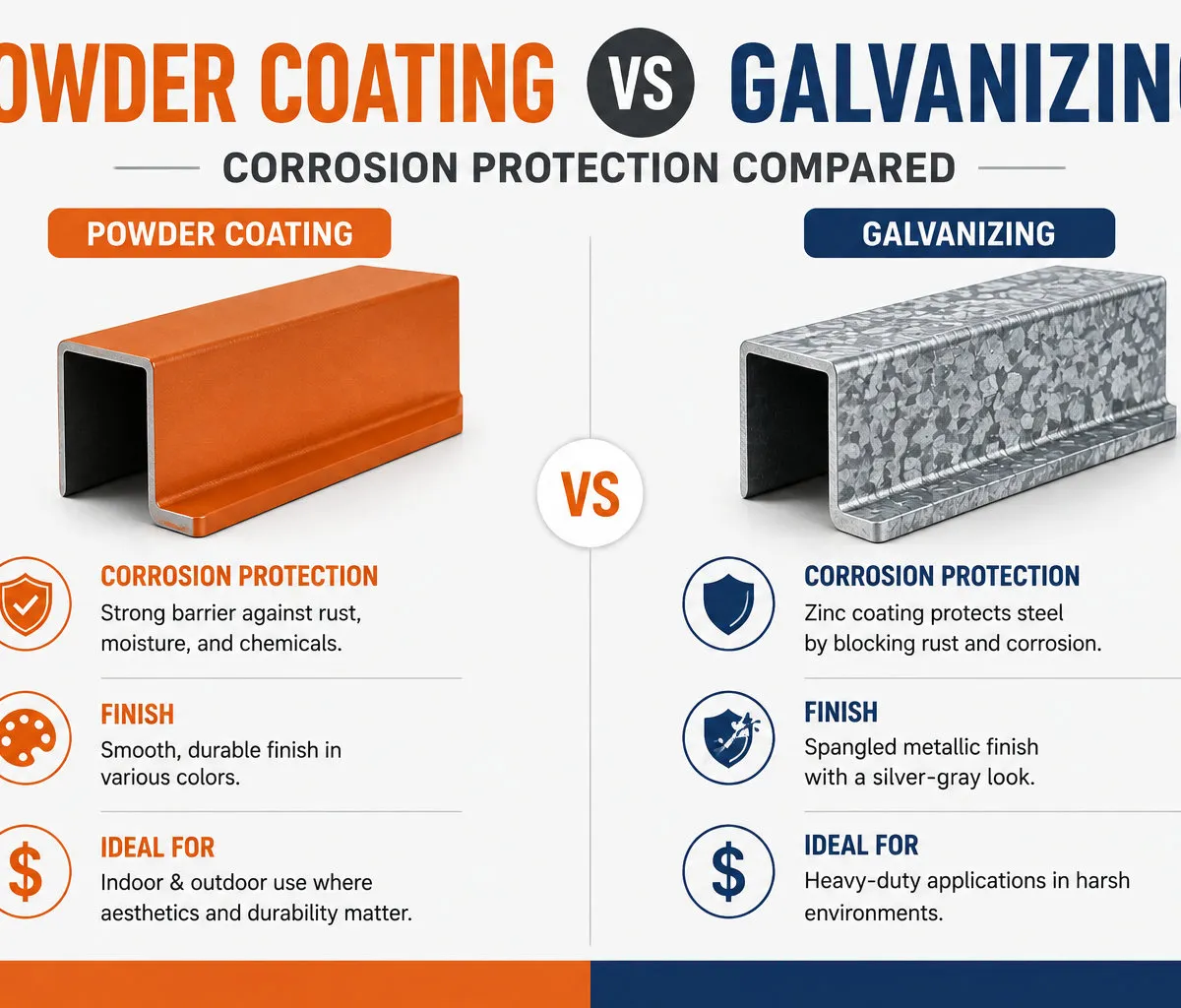
Understanding powder coating vs galvanizing corrosion resistance starts with recognizing these are fundamentally different protection mechanisms. Powder coating creates a protective barrier film on the metal's surface, physically blocking moisture and oxygen from reaching the base metal underneath. Galvanizing works differently, applying a zinc coating that not only forms a physical barrier but also provides sacrificial cathodic protection, meaning the zinc corrodes preferentially before the underlying steel, even if the coating is scratched or damaged.
This sacrificial protection is galvanizing's defining advantage: even when the coating surface is compromised, the surrounding zinc continues protecting exposed steel at the damage site, something a purely barrier-based coating like powder coating cannot replicate on its own.
Hot Dip Galvanizing vs Powder Coating: Understanding the Process Difference
Hot dip galvanizing vs powder coating differ significantly in how they're applied. Hot-dip galvanizing involves fully immersing steel in a bath of molten zinc, typically around 450°C, creating a metallurgically bonded zinc coating that's notably thick and durable. Powder coating, by contrast, applies dry powder electrostatically before curing it in an oven at a much lower temperature, typically 180 to 200°C, forming a polymer film rather than a metallic bond.
This process difference explains why galvanizing tends to produce a more uniform, complete coating even on complex shapes with hard-to-reach internal surfaces, since the molten zinc bath coats every accessible surface simultaneously, including areas that spray-based powder application might not reach as evenly.
Galvanized Steel vs Powder Coated Steel: Comparing the Finished Product
When comparing galvanized steel vs powder coated steel side by side, the visual and functional differences become clear. Galvanized steel typically has a distinctive matte, slightly textured silver-grey appearance, offering excellent corrosion protection but limited aesthetic customization. Powder coated steel offers virtually unlimited color and finish options, from smooth glossy surfaces to textured or metallic effects, making it the clear choice when appearance matters alongside protection.
Many projects actually combine both processes, galvanizing steel first for maximum corrosion resistance, then powder coating over the galvanized surface for both enhanced protection and custom color, a combination increasingly popular for outdoor architectural and structural applications.
Powder Coat or Galvanize for Outdoor Metal: Making the Right Choice
Deciding whether to powder coat or galvanize for outdoor metal projects depends heavily on your specific exposure conditions and aesthetic requirements. Galvanizing excels in harsh, high-corrosion environments, industrial sites, coastal areas, or applications where the coating is likely to experience physical damage, since its sacrificial protection continues working even after surface scratches occur.
Powder coating remains an excellent choice for outdoor applications where appearance matters significantly and corrosion risk is more moderate, offering broad color flexibility with strong, though not sacrificial, protection. For maximum outdoor durability without compromising on appearance, the combined galvanize-then-powder-coat approach often delivers the best of both methods.
Powder Coating vs Galvanizing Durability: Long-Term Performance Compared
Examining powder coating vs galvanizing durability over time reveals galvanizing's genuine long-term advantage in harsh conditions, since its sacrificial zinc layer continues protecting steel for decades, even as the coating gradually wears down. Properly galvanized steel can often provide corrosion protection for 50 years or more in typical outdoor environments, depending on local conditions and coating thickness.
Powder coating, while highly durable and resistant to chipping and fading under normal conditions, doesn't offer this same self-healing sacrificial quality. Once a powder coated surface is scratched through to bare metal, that specific point becomes vulnerable to corrosion in a way galvanizing's surrounding zinc actively works to prevent.
Galvanizing vs Powder Coating Cost: Weighing the Investment
Galvanizing vs powder coating cost comparisons depend significantly on part size, complexity, and required corrosion protection level. Hot-dip galvanizing often has higher setup costs for smaller projects, since it typically requires larger batch processing and specialized dipping facilities, making it more cost-effective at scale for larger structural or industrial projects.
Powder coating can be more accessible and cost-effective for smaller runs, custom color requirements, or projects where appearance carries more weight than maximum corrosion resistance. Requesting quotes for both processes based on your specific project scope, rather than assuming one is universally more affordable, remains the most reliable way to compare actual costs.
Best Rust Protection Powder Coat or Galvanize: A Direct Comparison
When the priority is simply the best rust protection powder coat or galvanize can offer, galvanizing generally wins for pure corrosion resistance in harsh or high-risk environments, thanks to its sacrificial protection mechanism. However, "best" depends on your full requirements, if aesthetics, color matching, or a smooth architectural finish matter alongside protection, powder coating or the combined galvanize-plus-powder-coat approach often represents the more practical overall solution.
Working with an experienced finishing provider who understands both processes helps ensure you're matching the right protection level to your project's actual risk profile, rather than defaulting to whichever process is more familiar.
Powder Coating vs Galvanizing for Fencing: A Common Application Decision
Powder coating vs galvanizing for fencing comes up constantly, since fencing faces sustained outdoor exposure, physical contact, and potential impact damage over its service life. Galvanized fencing offers excellent baseline corrosion resistance and is often the more economical choice for purely functional, industrial, or agricultural fencing where appearance is secondary.
Powder coated fencing, particularly when applied over a galvanized base, delivers both strong corrosion protection and a polished, customizable appearance, making it the preferred choice for residential, commercial, or architectural fencing projects across the GTA where visual presentation matters alongside durability.
Difference Between Galvanized and Powder Coated: A Quick Reference
Summarizing the difference between galvanized and powder coated finishes:
- Protection mechanism — Galvanizing offers sacrificial, self-healing protection; powder coating provides barrier-only protection
- Appearance — Galvanizing has limited aesthetic options; powder coating offers extensive color and finish flexibility
- Best environments — Galvanizing excels in harsh, high-corrosion settings; powder coating suits moderate exposure with aesthetic priorities
- Damage resistance — Galvanizing continues protecting steel even when scratched; powder coating's protection stops at the point of damage
- Combination potential — Both processes can be layered together for maximum protection and custom appearance
Understanding these distinctions helps you specify the right process, or combination of processes, for your specific project requirements.
Powder Coat vs Galvanize Longevity: How Long Each Actually Lasts
Comparing powder coat vs galvanize longevity in real-world Ontario conditions, hot-dip galvanizing typically offers the longer baseline service life in harsh environments, often decades, thanks to its sacrificial corrosion protection. Powder coating's longevity varies more significantly based on application quality, UV exposure, and physical wear, generally offering strong performance for many years but requiring more careful maintenance in high-corrosion-risk settings compared to galvanizing's more forgiving, self-protecting nature.
For projects where either process alone doesn't fully meet longevity requirements, combining galvanizing's sacrificial protection with powder coating's surface durability and appearance often delivers the longest-lasting, most complete solution available.
Frequently Asked Questions
1. Can powder coating be applied over galvanized steel? Yes, applying powder coating over properly prepared galvanized steel is a common and effective practice, combining galvanizing's sacrificial corrosion protection with powder coating's durability and color flexibility.
2. Which offers better protection in coastal or highly corrosive environments? Galvanizing generally offers superior protection in harsh, high-corrosion environments due to its sacrificial zinc coating, which continues protecting steel even if the surface is scratched or damaged.
3. Is galvanizing more expensive than powder coating? It depends on project scale; galvanizing can have higher setup costs for smaller projects but often becomes more cost-effective for larger structural or industrial runs, while powder coating is often more accessible for smaller custom projects.
4. Does galvanized steel look as polished as powder coated steel? No, galvanized steel typically has a matte, textured grey appearance, while powder coating offers a much wider range of colors, gloss levels, and finish textures.
5. What's the best option for outdoor fencing in Ontario? For purely functional fencing, galvanizing offers strong, economical protection, while powder coating, especially applied over a galvanized base, provides both durability and a more polished, customizable appearance.
Final Thoughts on Powder Coating vs Galvanizing
Choosing between powder coating vs galvanizing ultimately comes down to your project's specific corrosion risk, budget, and aesthetic requirements. For maximum protection in harsh environments, galvanizing's sacrificial corrosion resistance is difficult to beat, while powder coating offers unmatched appearance flexibility, and combining both processes often delivers the most complete, long-lasting solution for demanding outdoor and industrial applications across the Greater Toronto Area.
Koojo Custom Powder Coating 10874 Steeles Ave E, Milton, ON L9T 2X8, Canada Phone: (905) 876-7060
Get Expert Advice on the Right Protection for Your Project →