- Client industry
- Automotive manufacturing
- Part
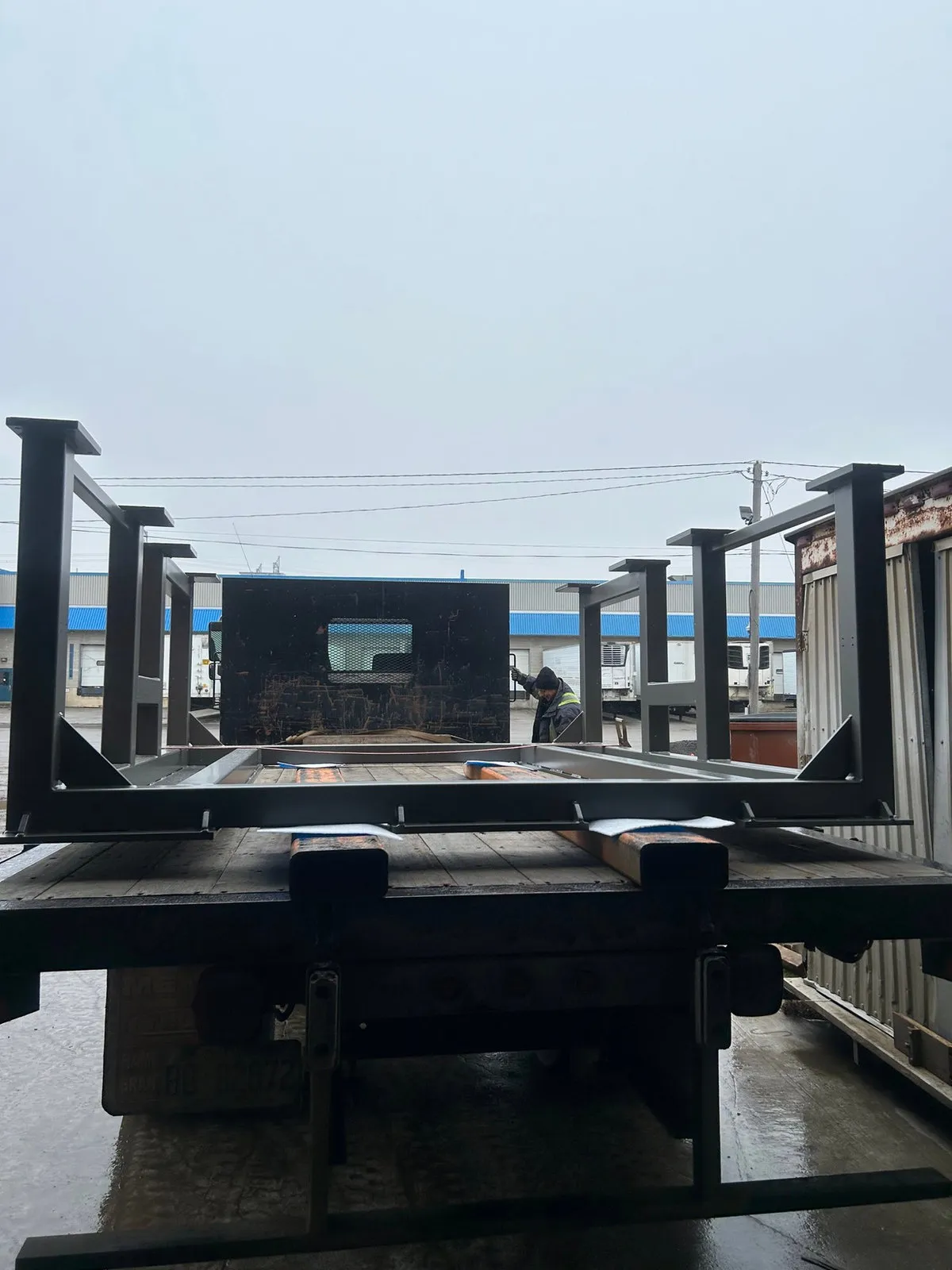
- Conveyor system frame
Automotive plant conveyor frame case study: this page shows how Koojo Custom Powder Coating takes a welded conveyor frame from bare metal to a cured, inspected finish for an automotive production line. We work from 10874 Steeles Ave E in Milton, Ontario, and have coated more than 10,000 items since 2012.
Conveyor frames carry parts through every shift, so the finish has to resist chips, cleaning chemicals and constant contact. Below you will find the challenge, our approach, the result and the specs for this conveyor frame project, plus the services behind it. Standard orders carry a 48 hour turnaround, and we are open Monday to Friday, 7 AM to 5 PM. One shop handles blasting, pretreatment, coating, curing and inspection, so scheduling stays simple and every step is recorded. The details here come from our job file and shop photos, so plant engineers and maintenance buyers can judge the work on evidence before sending a drawing.
Project Snapshot
Item | This job |
|---|---|
Client industry | Automotive manufacturing |
Part | Conveyor frame for a production line |
Metal | Heavy carbon steel tube and structural channel |
Size / Weight | 18 ft L x 4 ft W x 3 ft H / Approx. 3,400 lb |
Powder | High-durability hybrid/polyester powder coating |
Colour Code | Safety Yellow (RAL 1023) / Plant Spec |
Turnaround | 48 hours (standard orders: 48 hr) |
The Challenge
The challenge was to give an automotive conveyor frame a finish that survives daily production-line wear, covers every weld and inside corner evenly, keeps bolt-on points bare, and returns in time for the plant's installation date.
Conveyor frames in automotive plants work hard. They carry fixtures and parts through every shift, get bumped by carts and forklifts, and are wiped down with degreasers during cleaning. A thin or poorly bonded coating chips at the edges first, and rust then creeps in at the welds. For OEM conveyor frames, a failed finish means stripping and recoating, which brings unplanned downtime that no plant wants. Edges, welds and fixture contact points are the areas most at risk.
A welded conveyor frame also brings its own prep problems. The fabricated frame structure carries mill scale and weld spatter that block adhesion. Machined mounting faces and threaded holes must stay bare so the frame bolts into the line without rework. That is why this automotive plant conveyor frame case study starts with the problem rather than the powder. Those are the details a coater has to plan for before quoting.
Timing mattered as much as quality. Installs like this are tied to the plant shutdown schedule, so the conveyor frame turnaround could not slip on this conveyor frame project. The size of the automotive plant conveyor frame also called for planned space in our large oven rather than a standard batch slot.
Our Approach
Our approach in this automotive plant conveyor frame case study followed one controlled sequence: prepare the metal, apply the powder electrostatically, then cure and inspect the finish. Each step was set for the frame's size, its welds and the plant's finish specification.
Preparation
We started by checking the drawing and the plant's finish spec, confirming the specified colour code and marking every surface that had to stay uncoated. Abrasive blast cleaning then handled mill scale removal and welding spatter removal in one pass, leaving a blast profile for powder coating so the finish had something to grip. Next came degreasing and a phosphate pretreatment for steel, followed by a rinse and a full dry so no moisture stayed in seams or tube ends. Masking machined surfaces and masking threaded holes came last, keeping every bolt-on point clean. Open tube ends were checked so pretreatment liquid could drain and dry fully. Much of an automotive conveyor frame's service life is decided at this stage.
Application
Electrostatic powder application charges the powder so it wraps around tubes and into inside corners. On this conveyor frame project, that gave even coverage over welds and edges, the places where chips usually start on assembly line equipment. We racked the frame so powder could reach every face and kept film build consistent from flat panels to corners. Hanging points were chosen where marks would not show once the frame was installed. A durable powder finish depends on that coverage as much as on the powder itself.
Curing & Inspection
Large part oven curing at 180–200 °C, following the powder maker's cure schedule, cross-linked the powder into a hard, chip resistant finish. Our oven handles parts up to 6,000 lb, so the heaviest sections of the automotive plant conveyor frame cured with the rest. We then ran a dry film thickness check to ASTM D7091 on faces, edges and welds, plus a cross hatch adhesion test to ASTM D3359. Readings focus on edges and welds because those are the first places a thin coat would show. Every reading went into the job file, which keeps this automotive plant conveyor frame case study verifiable. Standard orders run on a 48 hour turnaround, and the actual time for the automotive conveyor frame is shown in the snapshot.
The Result
The result was a fully coated automotive conveyor frame with an even, chip resistant finish over every weld and edge, clean bolt-on points, and thickness and adhesion readings on file for the plant's quality records.
Because the masked faces on the automotive plant conveyor frame stayed bare, it could be bolted straight into the line with no grinding on site. Film build stayed consistent from flat faces to inside corners, which matters most where carts and fixtures strike the frame. Good conveyor system frame finishing like this means fewer touch-ups and less downtime between shutdowns. The cured finish also wipes clean during routine plant washdowns.
A colour matched equipment finish keeps the line consistent with the plant's other equipment, and corrosion resistant frame coating at the welds protects the joints that carry the most load. This conveyor frame case study reflects the same standard we apply to all automotive plant equipment coating.
If your line needs the same result, use this automotive plant conveyor frame case study as a benchmark when you compare quotes. Ask any coater for the prep method, test readings and a powder coated frame you can inspect, not just a price. Plant maintenance teams also gain a clear record: the colour code, powder and readings are stored, so a replacement frame or an added section can be matched later without guesswork.
Specs at a Glance
The specs below summarise the technical side of this conveyor frame project: film thickness, preparation grade, powder and cure. Use them to compare the frame with your own equipment before you request a quote.
Spec | Value |
|---|---|
DFT (dry film thickness) | 3.5–5.0 mils, measured to ASTM D7091 |
Prep grade | SSPC-SP 10 Near-White Blast & Iron Phosphate |
Powder | Industrial Polyester Hybrid, Safety Yellow, RAL 1023 |
Cure | 180–200 °C part temperature per powder data sheet (20 min) |
Our quality system is certified by the Absolute Bureau of Certification; see powder coating quality assurance for our checks, and test reports are available on request. For bigger jobs, our large part powder coating capacity covers parts up to 6,000 lb. The automotive conveyor frame went through the same oven and inspection steps as any production run. Every value comes directly from our shop job record.
Services Used
This conveyor frame project used three Koojo services as one process: sandblasting, surface preparation and pretreatment and industrial powder coating. The service and industry pages linked below explain each step for buyers planning similar plant equipment.
Industrial powder coating covers heavy frames and equipment like this one. Sandblasting services handle rust, scale and spatter, while powder coating surface preparation covers pretreatment and masking. The job also shows powder coating for manufacturers in practice: material handling equipment coating, automotive manufacturing equipment finishing and production line frame coating, all applied to the automotive conveyor frame under one roof. Booking all three with one shop avoids passing a frame between vendors, which is where delays and handling damage usually happen.
Have a Similar Part?
Send photos, sizes and quantities for your frame, and mention this automotive plant conveyor frame case study so we can match the approach. Call (905) 876-7060 or request a powder coating quote online, Monday to Friday, 7 AM to 5 PM.
We will confirm prep, powder and timing before work begins, or you can browse more powder coating projects.